Skip to content
Markos Tennis
Ages 5 and up · Coach Hayk

Kids & junior tennis lessons in Pasadena

The first coach a child has decides whether they play tennis for a season or for twenty years. Hayk is the one you want for that — patient, genuinely fun to be on court with, and completely unwilling to let a child build a habit they will have to unlearn later. $100 an hour.

What most parents are actually worried about

Not whether their child will become a tour professional. Whether they will enjoy it enough to come back next week, whether the coach will be patient with a seven-year-old who cannot stand still, and whether the money is buying real coaching or an hour of supervised ball collection.

Those are the right things to worry about. A child who is bored for an hour learns nothing and quits by spring. A child who is entertained but never taught properly develops a service motion that has to be rebuilt at fourteen. The job is to do both at once — and that is a genuinely different skill from coaching adults.

Hayk is the coach in this program built for exactly that. Kids, juniors and complete beginners are what he does, not what he takes when nothing better is on the schedule.

How lessons are adapted by age

Nobody learns tennis on a full-size court with a yellow ball at five years old. Sessions are scaled properly so children succeed from the first minutes.

  • Ages 5–7 — short rackets, red low-compression balls and a small court. Coordination, balance and hand-eye work disguised as games. Children rally in their first session rather than missing for an hour.
  • Ages 8–10 — orange and green balls, larger court, and the beginning of real technique: grips, contact point and the first proper serve motion. Point play introduced as scoring games.
  • Ages 11–14 — full court, yellow ball, and stroke mechanics that are built to hold up when the pace increases. Footwork patterns, consistency targets, and the first tactical ideas about where to hit and why.
  • Ages 14+ — technical refinement, match play, and the option to move across to Markos for competitive and tournament work when the player is ready for it.

What you get as a parent

A text after the lesson describing what your child actually worked on. Not a generic "great session today" — the specific thing being changed and how it went. It is a small thing that takes two minutes and it is the difference between paying for tennis and understanding what you are paying for.

You also get an honest answer about whether more frequent lessons are worth it for your child right now. Sometimes the answer is no. A seven-year-old training three times a week usually ends up loving tennis less, not more, and we will say so.

You are welcome to watch, and equally welcome not to. Some children play better with a parent on the fence and some do not — we will tell you which one yours is, kindly.

When a junior is ready for competitive training

At some point a junior who is enjoying it starts asking about tournaments, or a high school team, or wanting to beat someone specific. That is the signal that the coaching needs to change — from building strokes to building a player who can win points with them.

Both coaches take a junior that far — Hayk keeps plenty of his players all the way through, and Markos, at $120 an hour, spends most of his week on exactly this: point construction, opponent patterns, serve development under pressure and the intensity that comes from being coached by someone who has competed internationally. Plenty of juniors in this program train with both in the same week.

We will tell you when your child is ready. We will also tell you when they are not, which is the more useful half of that promise.
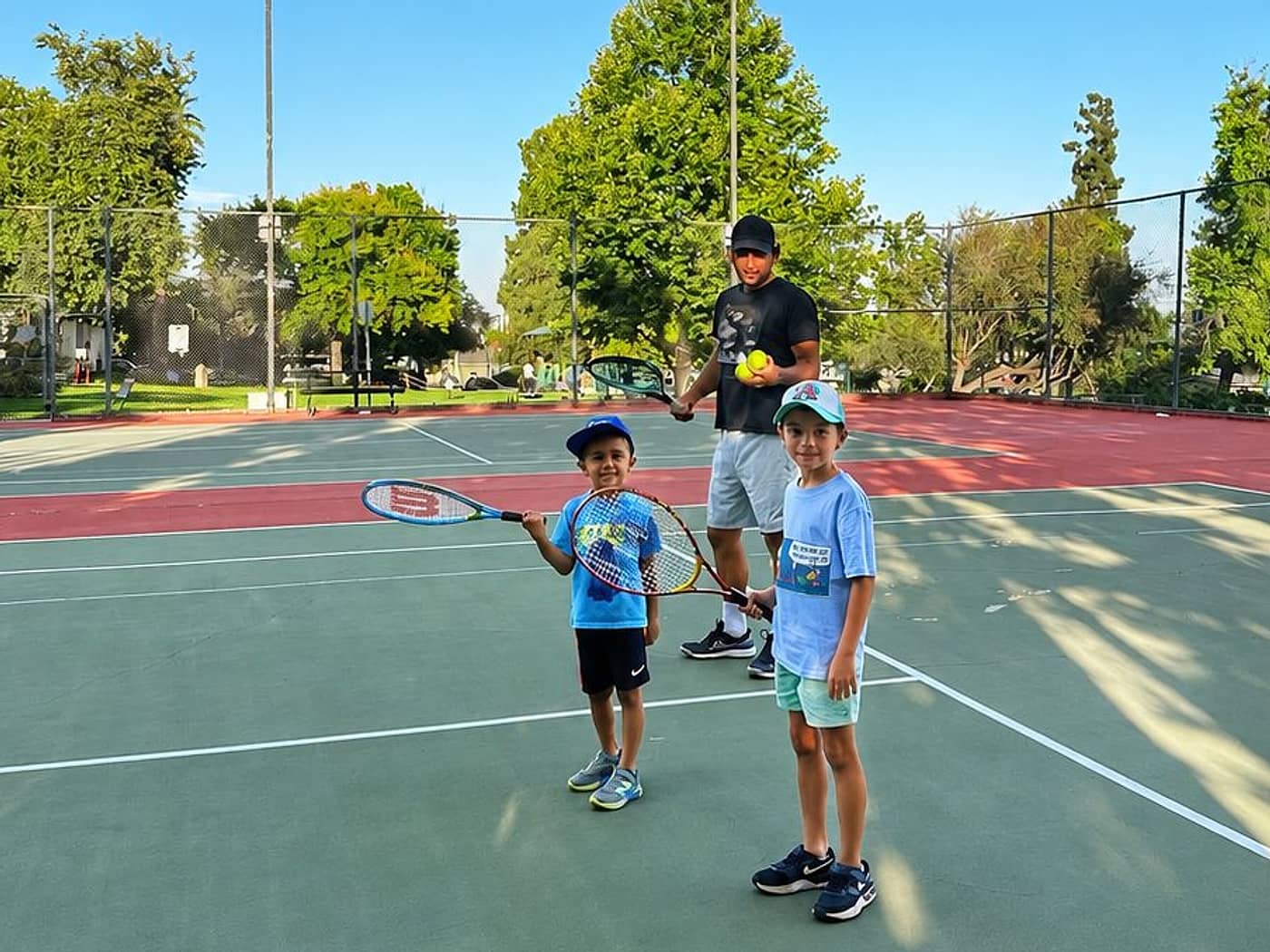
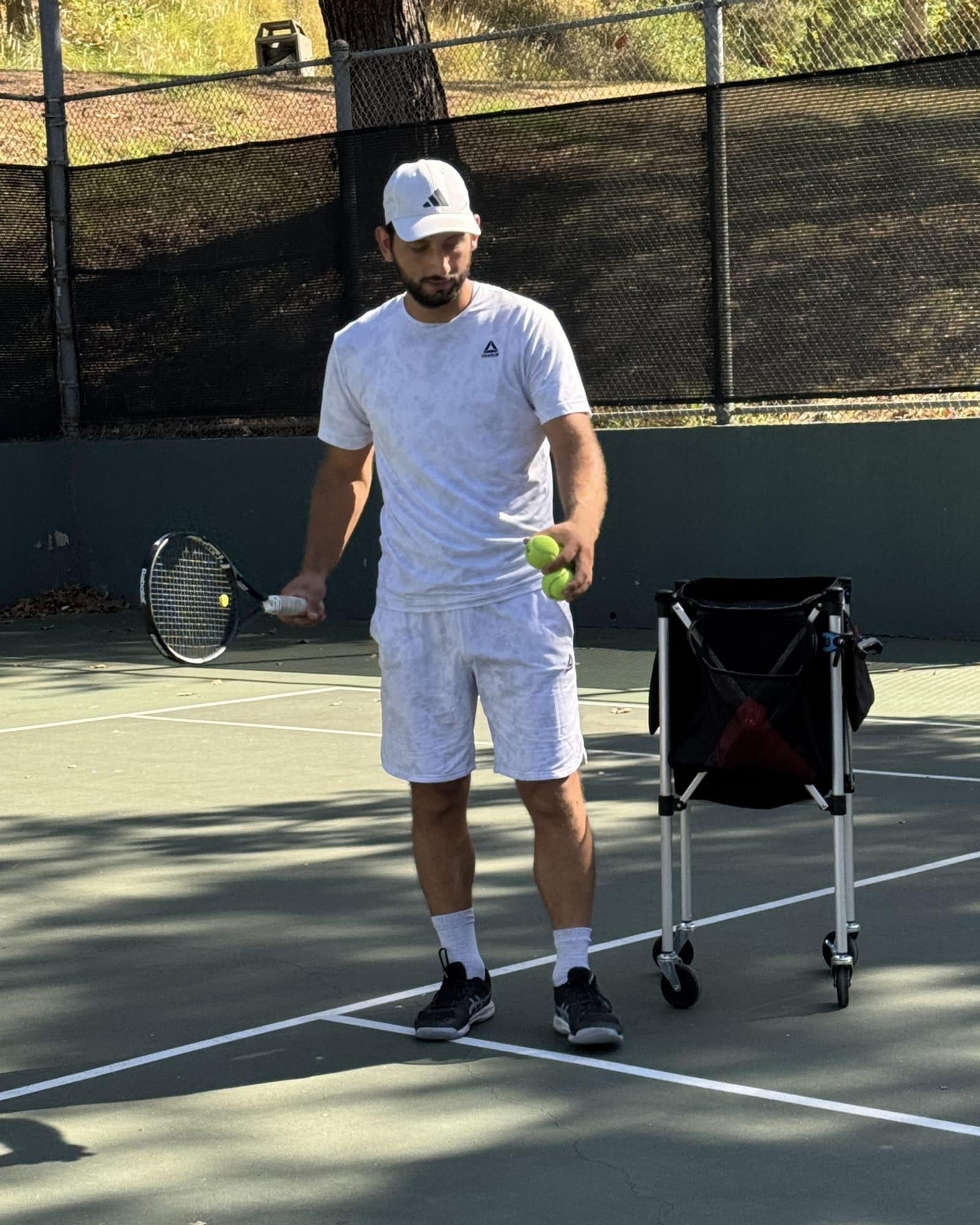
Coach Hayk with two young beginners at the end of a junior tennis lesson near Pasadena
Who this is for

You should book this if…

Your child has never played

Nothing needs to be bought and nothing needs to be known. Hayk starts children from zero every week.

They tried a group and got lost

Large clinics work for some children and leave others standing at the back of a line. One-on-one fixes that immediately.

They love it and want more

A structured weekly plan, proper technique, and a route into tournament tennis when they are ready for it.

You want it to be fun

Because a child who does not enjoy the hour will not be playing this sport in two years, whatever their technique looks like.

What the hour looks like

A session, start to finish

01

Warm-up games

Movement and coordination work that a child experiences as a game rather than as drills. It sets the tone for the hour.

02

One skill, taught properly

A single technical focus per session, broken down small enough to succeed at and repeated enough to stick.

03

Rally and play

Live ball, scoring games and competition against the coach — where the new skill gets tested under a little bit of pressure.

04

A message to you

A short text to the parent after the session: what was worked on, how it went, and what to expect next time.

Your coach

The coach for this

Hayk runs the junior side of the program. If your child is under fourteen, brand new to the sport, or has tried lessons before and lost interest, he is the right booking — and at $100 an hour he is also the more sensible one.

Pricing

What it costs

Every rate on this site is the rate you pay. No booking fee, no platform commission, no membership.

SessionHaykMarkos
Private lesson (1 hour)One-on-one, one hour, on a court near you $100 $120
Weekly package — 2+ sessions per weekBilled per session, structured plan and progress tracking $90 / session $110 / session
Group lesson (3–4 players)Drill-based session with live point play $55 / player $55 / player
High-level hitting partner (1 hour)Competitive-intensity rallying, patterns and match simulation $120
Semi-private for twoSiblings, partners and doubles pairs — ask when you book On request On request
On court

What a session actually looks like

Filmed during real lessons on the courts we coach on. No stock footage, no actors — just what an hour here looks like.

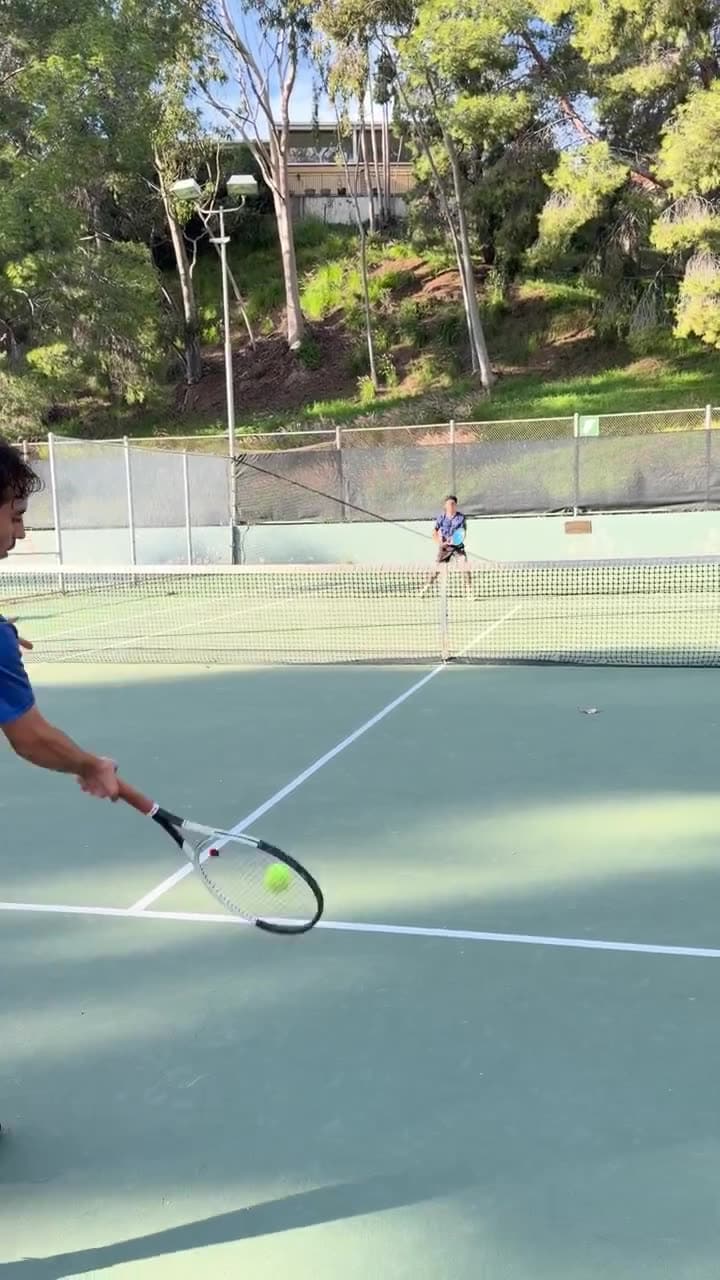
Tennis coach rallying with a player across the net during a lesson on a Los Angeles court
A rally inside a lessonLive-ball rallying across the net. This is where a technical change has to survive real pace — a change that only works on a feed is not a change yet.
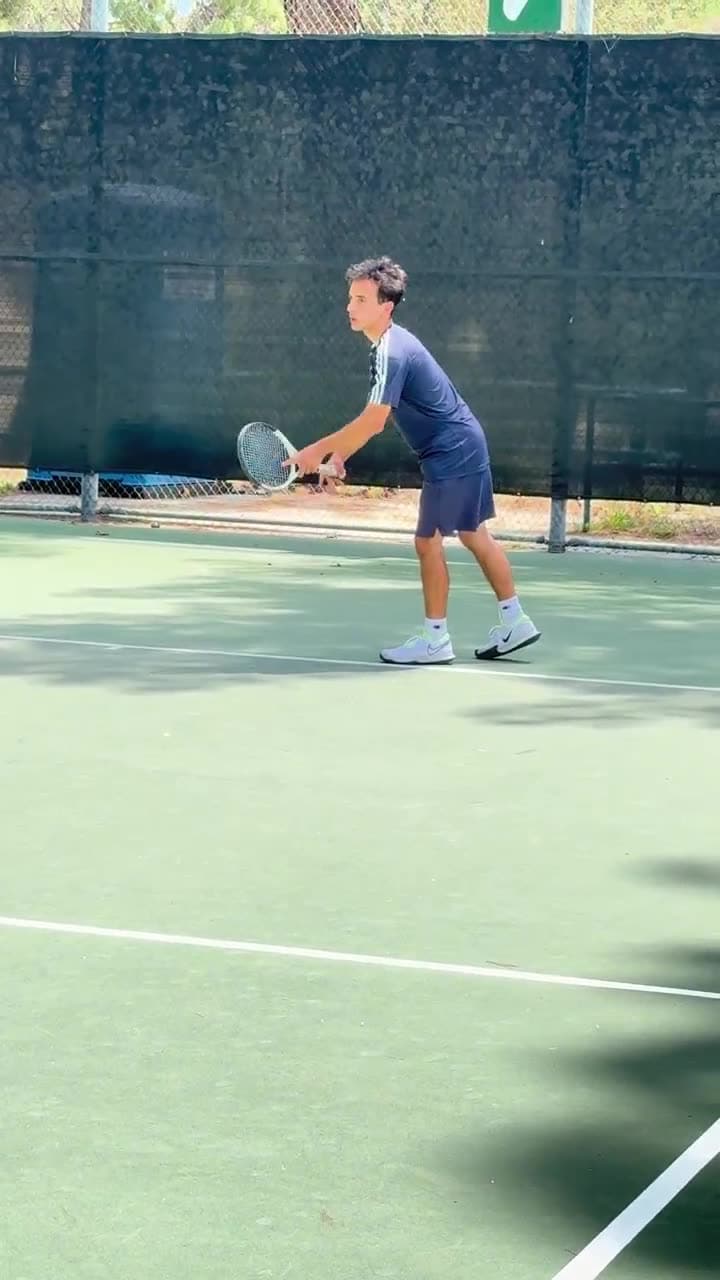
Slow-motion footage of Markos Mkrtchyan hitting a groundstroke on a Los Angeles tennis court
Groundstrokes, slowed downFilmed at 120 frames a second. Slowing a swing down is often the moment a player finally sees what their racket has been doing all along.
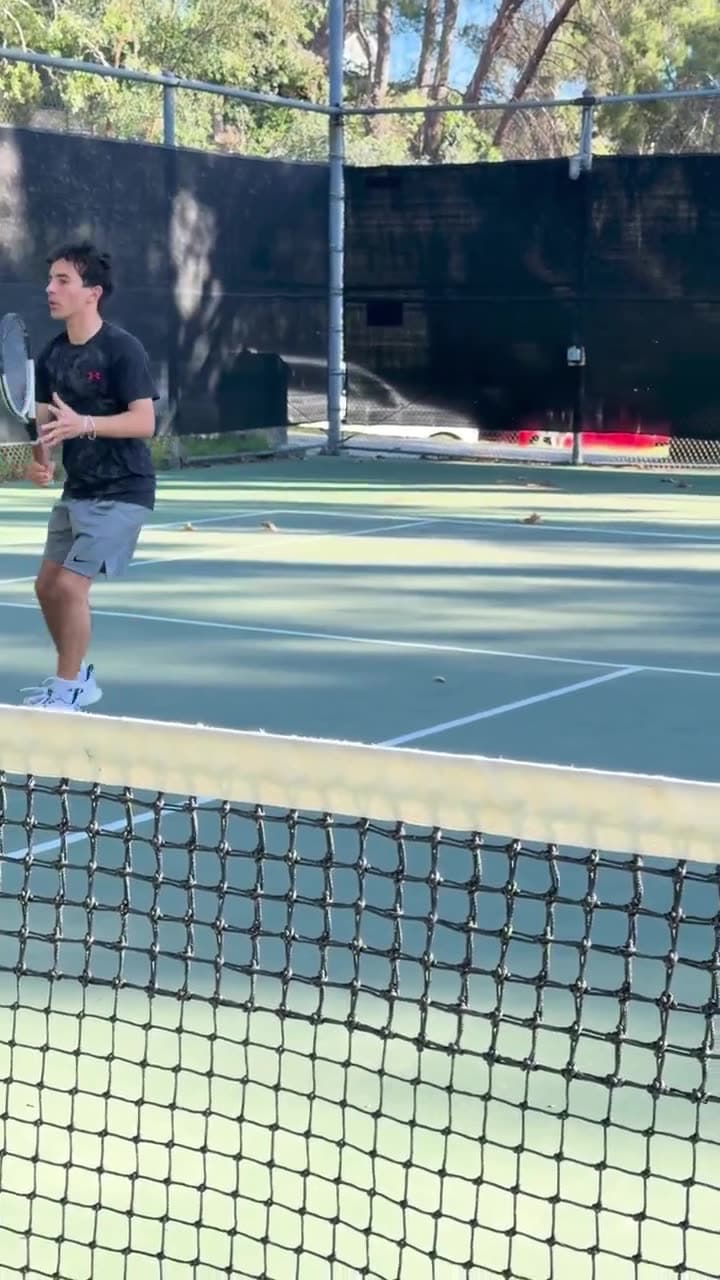
Tennis player in ready position preparing to split step during a training session
Ready position and split stepThe half-second before every shot. Most points are lost here, before the ball has even been struck — and it is one of the fastest things to fix.
Book a lesson

Tell us who is playing. We will do the rest.

Send this and it reaches the coaches directly — no marketplace, no call centre, no service fee. Most enquiries get an answer within a couple of hours during the day. If you would rather just text, that number works too.

  • No club membership needed — we arrange the court, or come to yours
  • A straight answer about which coach fits, even if it is the cheaper one
  • 24-hour notice to reschedule, free of charge
You’re booked in. A confirmation email is on its way to you now. We will text you very soon to lock in the exact day, time and court. Need it sooner? Call or text (747) 336-1223.

Takes about 30 seconds. You get an instant confirmation email, then a text from us to set the exact time. We only use these details to arrange your lesson — no mailing list, no sharing, no spam.

FAQ

Questions about kids & juniors

What is the youngest age you coach?

Five. At that age we use short rackets, low-compression red balls and a scaled-down court, so children are rallying in the first session instead of missing for an hour. The focus is coordination, balance and enjoyment — technique comes in properly around seven or eight.

Does my child need their own racket?

Not for the first lesson. We will bring one in the right size. Junior rackets are sized by height, and buying the wrong one is one of the most common and most damaging mistakes parents make — so ask us before you buy and we will tell you exactly what size and roughly what it should cost.

Can I stay and watch the lesson?

Absolutely. Some children focus better with a parent watching and some do noticeably better without. We will give you an honest read on which one your child is after a session or two.

How often should a child take tennis lessons?

For most children starting out, once a week is right — enough to progress, not so much that it becomes a chore. Once they are genuinely keen and want to compete, twice a week plus match play is the level that produces real improvement.

My child is shy and not very sporty. Is this a waste of money?

It is one of the better reasons to book a private lesson rather than a group. There is no line of confident kids to be at the back of, and the whole hour can be pitched at their pace. Tell us when you book and Hayk will plan the first session around it.

Do you coach siblings together?

Yes — semi-private sessions for two work well for siblings of a similar level and age. Ask when you book and we will quote it.

Book a lesson this week

Tell us the player, the level and the part of town. We will match you to the right coach and arrange the court — usually the same day you ask.

Call or text Book a lesson