The gap between a good ball-striker and a good competitor
Most junior players who lose consistently are not losing because their forehand is worse. They are losing because they have no idea what they are trying to make the opponent do, they have one serve instead of two, and their game plan has no version B.
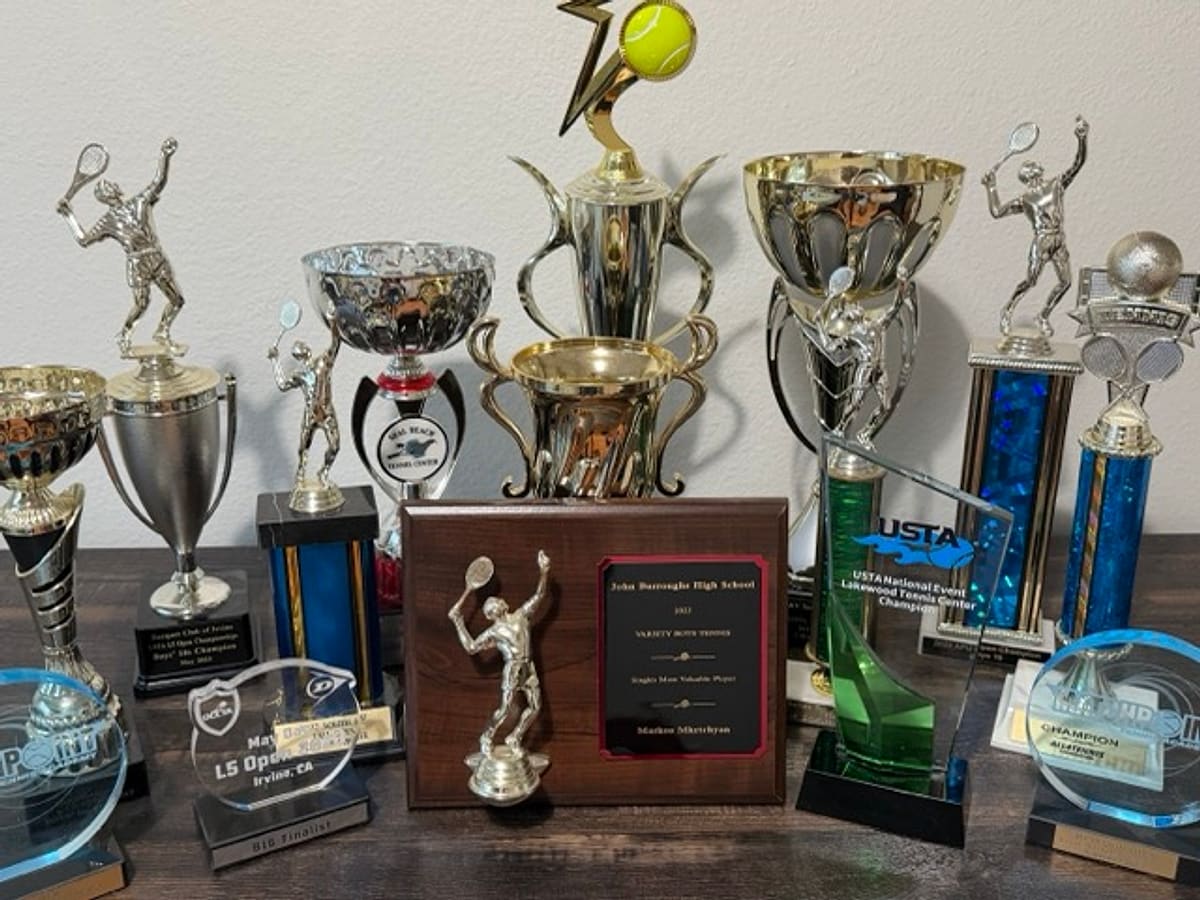
That gap is coachable, but it is not coachable in a group clinic and it is not coachable by someone who has never had to solve it in a match themselves. It takes a coach who has competed — who knows what a second serve feels like at 4–5 in a third set and can teach the routine that gets it in anyway.
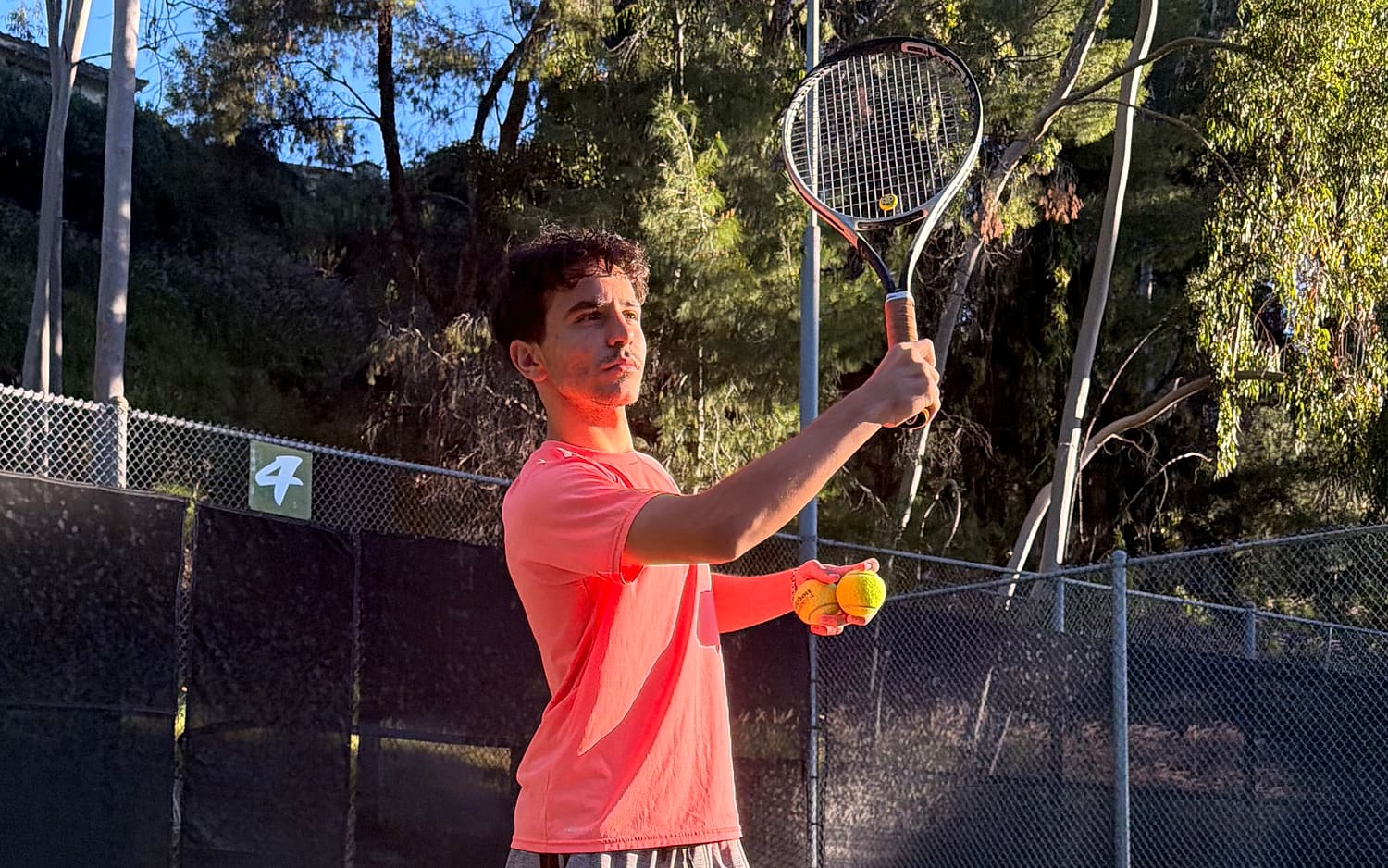
Markos competed internationally and came through a European training background before coaching in Los Angeles. That is the perspective these sessions are built on: technique in service of winning points, not technique for its own sake.
What competitive sessions cover
The mix depends on the player and on what is coming up in their tournament calendar, but the components are consistent.
- Point construction — the two or three patterns this player wins with, drilled until they are automatic, plus the patterns that are quietly losing them matches.
- Serve as a weapon — first serve placement rather than raw speed, and a genuine second serve with margin that holds up under pressure.
- Return games — position, intent and the plan for a big first serve versus a weak second, which is where most junior matches are actually decided.
- Pressure simulation — playing from behind, serving out sets, tiebreak routines, and drills that start at 15–40 so the player learns what that feels like before a tournament teaches them.
- Opponent reading — identifying what a player in front of you does not want to do, and building the pattern that makes them do it.
- Between-point routine — the physical and mental reset that separates players who lose one game from players who lose three.
For high school and college-bound players
High school tennis in Southern California is deeper than most parents expect, and the jump from a solid junior game to a competitive varsity position often comes down to serve, fitness and shot tolerance rather than pretty strokes.
For players thinking about college tennis, the honest conversation is worth having early: what level is realistic, what UTR range that implies, and how many matches they need to be playing to move it. We would rather give you that assessment straight than sell four more lessons a month against an unrealistic target.
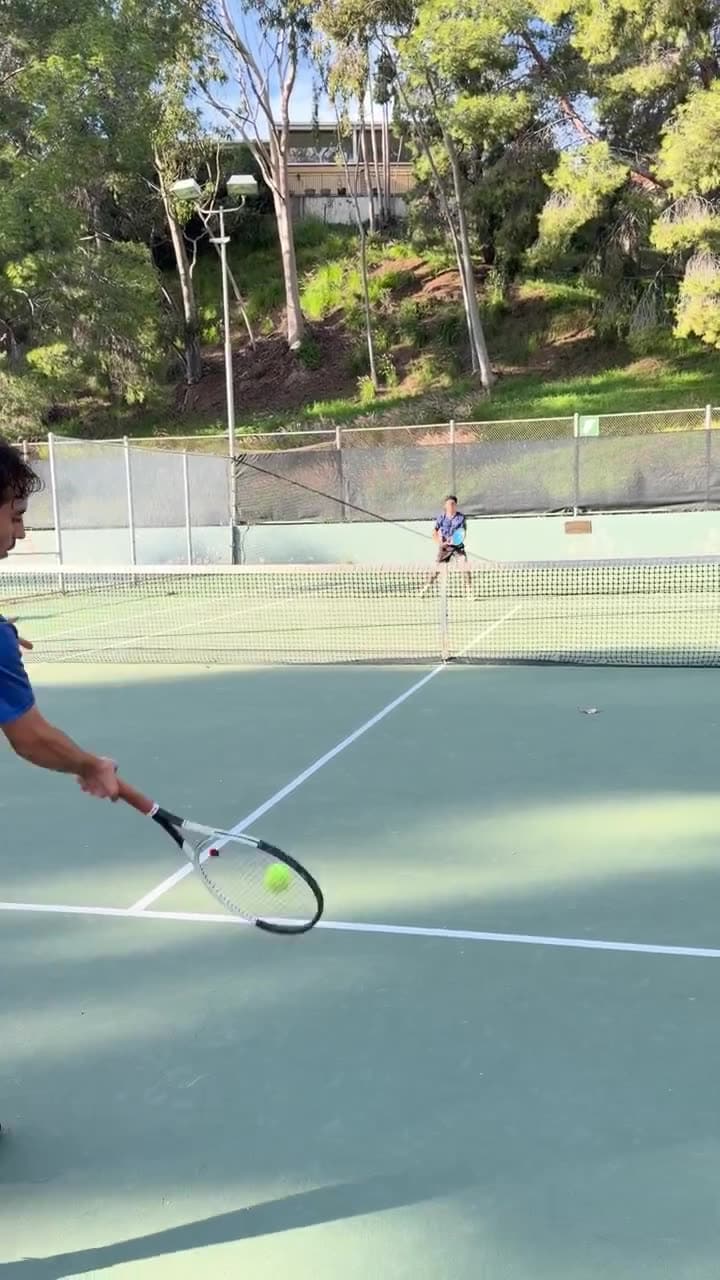
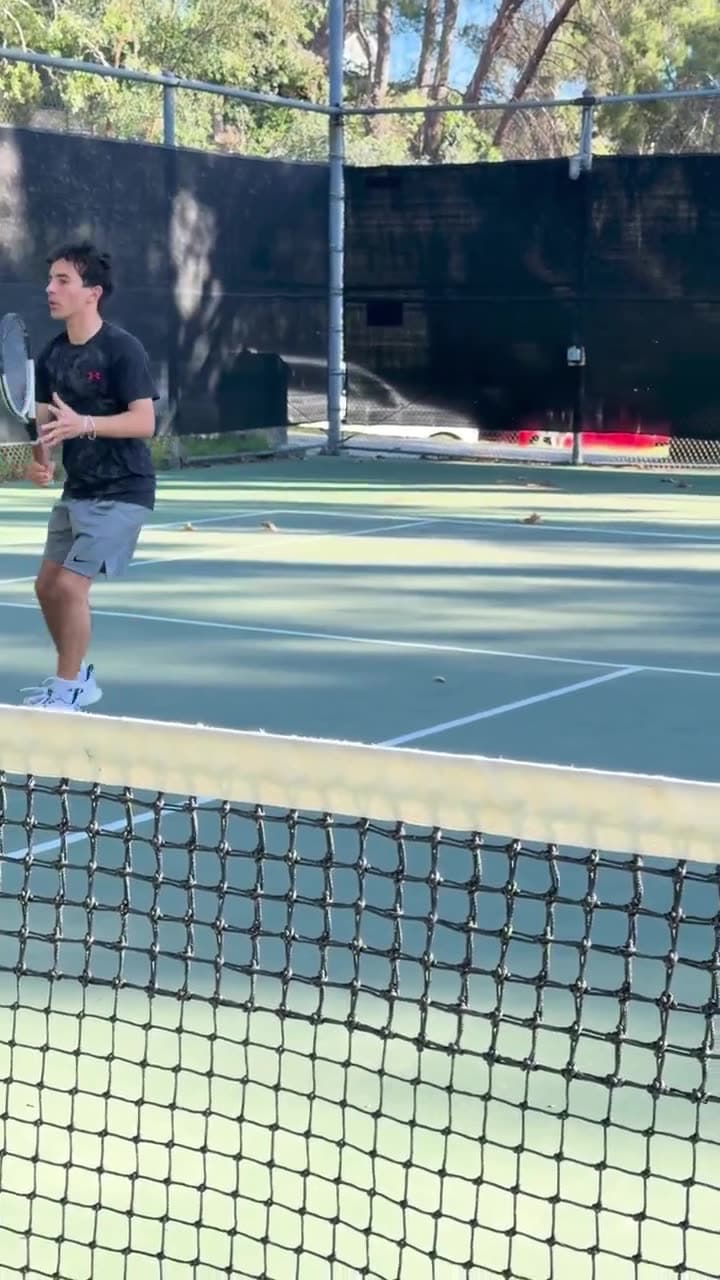
Training for these players usually pairs a technical or tactical session each week — most often with Markos — alongside regular match play and, where useful, hitting partner sessions between lessons.
How competitive players should structure a week
One coaching session a week maintains a game. Two sessions plus competitive match play develops one. If a player is chasing a ranking, the ratio that works is roughly one coached hour to two or three hours of playing — coaching gives the plan, matches expose whether it holds.
The weekly package rate of $110 a session exists for exactly this group, and it lets sessions be planned across a block rather than improvised one hour at a time.